As winter approaches, we want to make sure our homes are ready for whatever the cold weather throws at them. Our roofs take a beating every year, and sometimes we don’t think about them until there’s a problem. We’re going to look at some ways we can get our roofs in good shape before the snow and ice really start to pile up. Taking care of these things now can save us a lot of trouble later.
Key Takeaways
- We should clean our gutters and remove any debris. This includes looking for things like leaves and branches that can block water flow. Getting rid of this clutter removal services can help stop water from backing up and freezing.
- We need to check our roofs for any damage. This means looking for loose shingles, cracks, or any other weak spots. Fixing small issues now stops them from becoming big problems when the weather gets bad.
- We must think about how ice dams form and how to stop them. Ice dams can cause water to seep under shingles. We also need to consider the weight of snow on our roofs and make sure they can handle it.
Preparing Your Roof for Winter Weather
Before the first snowflake even thinks about falling, we need to get our roofs ready for whatever winter throws at them. It’s not just about aesthetics; it’s about protecting our homes from potential damage. Taking these steps now can save us a lot of headaches and money down the line.
Gutter Cleaning And Clutter Removal Services
Clogged gutters are a major problem waiting to happen. When leaves, twigs, and other debris build up, they stop water from flowing away from your house. This standing water can freeze, expand, and damage your gutters, or worse, back up under your shingles. We should make sure our gutters are clear of any blockages. This means getting up there and physically removing the gunk. If you have trees close to your house, this is especially important. We also need to check for any loose or sagging sections of the gutter system that might need repair.
- Clear out all debris: Leaves, pine needles, and dirt need to go.
- Flush the downspouts: Make sure water can flow freely all the way through.
- Inspect for damage: Look for cracks, holes, or areas pulling away from the house.
Inspecting For Damage
Winter weather can be tough on roofing materials. We should take a good look at our roofs for any signs of wear and tear before the heavy snow and ice arrive. Small problems now can become big, expensive ones later. We’re talking about things like missing or cracked shingles, loose flashing around chimneys or vents, and any areas where the roofing material looks worn down.
A thorough inspection helps us catch potential weak spots. Addressing these minor issues before winter sets in is far more practical than dealing with leaks or structural damage when the weather is at its worst.
Here’s what we should be looking for:
- Shingle condition: Check for curling, cracking, or missing shingles. Granule loss is also a sign of aging.
- Flashing: Examine the metal strips around chimneys, vents, and skylights. They need to be secure and free of rust or damage.
- Soffits and fascia: Look for any rot or damage in these areas, as they help with attic ventilation and protect the roof edges.
Addressing Common Winter Roofing Issues
![]()
Winter weather can really put our roofs to the test. We often see a few common problems pop up when the temperatures drop and snow starts to fall. Paying attention to these can save us a lot of headaches and expensive repairs down the line.
Ice Dam Prevention
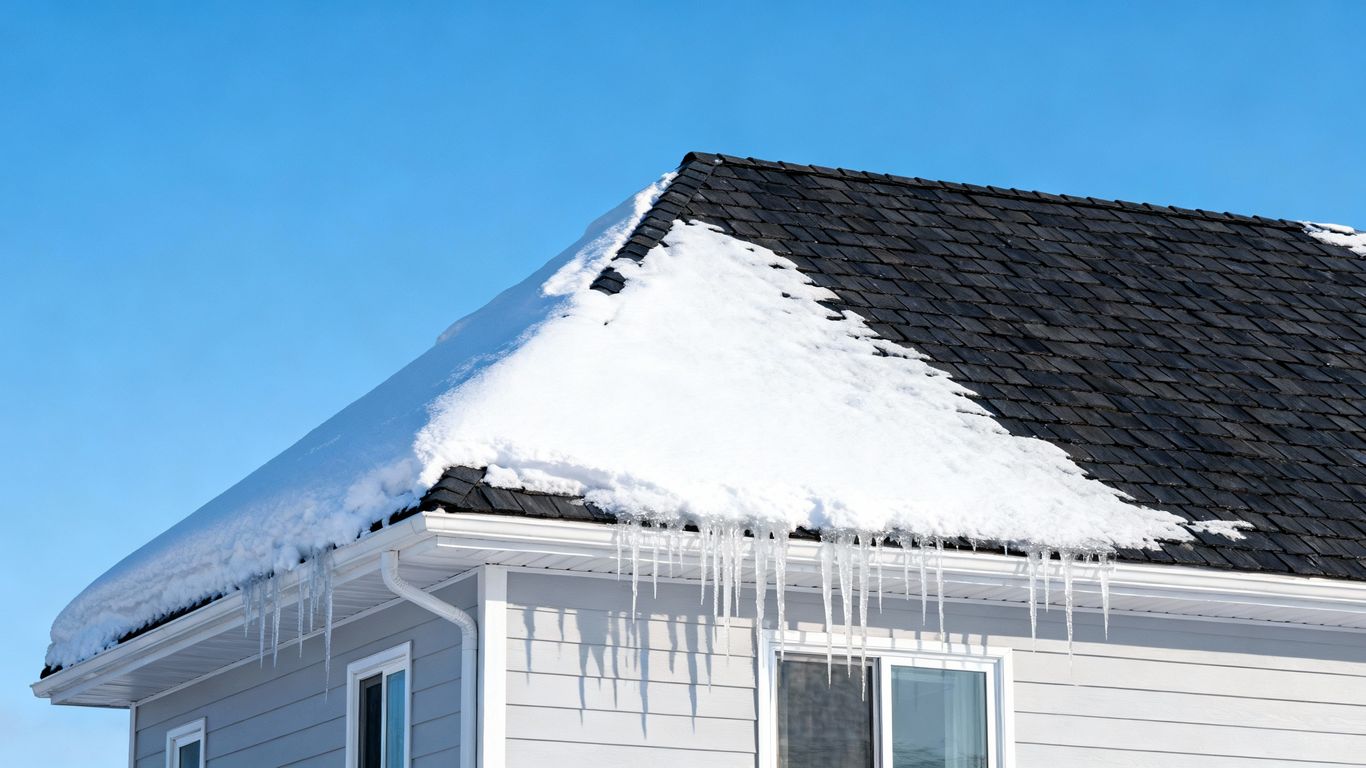
Ice dams are those annoying ridges of ice that form at the edge of our roofs. They happen when snow melts and then refreezes near the gutters. This frozen water can back up under shingles, letting water seep into our homes. We can help prevent this by making sure our attics are properly insulated and ventilated. Good airflow keeps the roof surface cold, so snow melts more evenly instead of piling up and freezing at the edges. We also check that gutters are clear of debris, which allows meltwater to drain away properly. Sometimes, we might install heat cables along the roof edge, but that’s usually a last resort.
Snow Load Management
We all know snow can get heavy, and a lot of it on our roofs can be a real concern. Different types of snow have different weights, and a heavy, wet snow can put a significant strain on your roof structure. We’ve seen roofs struggle under the weight, especially older ones or those with existing damage.
Here’s a quick look at how snow weight can add up:
- Light, fluffy snow: Around 1-5 pounds per square foot.
- Wet, heavy snow: Can reach 10-20 pounds per square foot, or even more.
- Ice accumulation: Can add substantial weight, sometimes doubling the load.
If you have a lot of snow, especially if it’s wet and heavy, we might recommend carefully removing some of it. We use special roof rakes that can reach the snow without damaging the shingles. It’s important to only remove snow from the lower sections of the roof and to be careful not to create piles that could damage the ground or landscaping. We never recommend trying to clear large amounts of snow yourself if you’re not experienced, as it can be dangerous.
We’ve learned that a little proactive work before and during winter can make a big difference. Keeping an eye on your roof, especially after a big storm, is just good sense. It’s better to deal with small issues before they become big, costly problems that affect the whole house.
We also look for signs that your roof might be struggling, like sagging areas or water stains inside. If you notice any of these, it’s best to give us a call so we can take a look.
Wrapping Up: A Safe Home for Winter
So, we’ve talked about a few things that can help keep your roof in good shape as the cold weather hits. It’s easy to forget about the roof when it’s just sitting up there, but it does a lot of work protecting us. Taking a little time now to check for ice dams or clear out debris can save you a big headache later. We really hope this gives you a good starting point for thinking about your home’s winter readiness. Don’t wait until a storm hits to find out there’s a problem; a little proactive care goes a long way.
Frequently Asked Questions
Why is it important to clean our gutters before winter arrives?
We need to make sure our gutters are clear of leaves and other debris. If they get clogged, water can back up and freeze, causing damage to the roof and creating ice dams. Keeping them clean helps water flow away from our house properly.
What are ice dams and how can we prevent them?
Ice dams are ridges of ice that form at the edge of a roof. They happen when snow melts and then refreezes in the gutters or lower roof areas. To help stop them, we can ensure our attic is well-insulated and ventilated, and we should also keep our gutters clear so melting snow can drain away.
How much snow can our roof handle, and what should we do if there’s too much?
Roofs are built to hold a certain amount of weight, but heavy, wet snow can become too much for them to bear. If we see a very large accumulation of snow, especially if it’s wet and heavy, we should consider having it carefully removed by professionals to avoid any structural problems.